
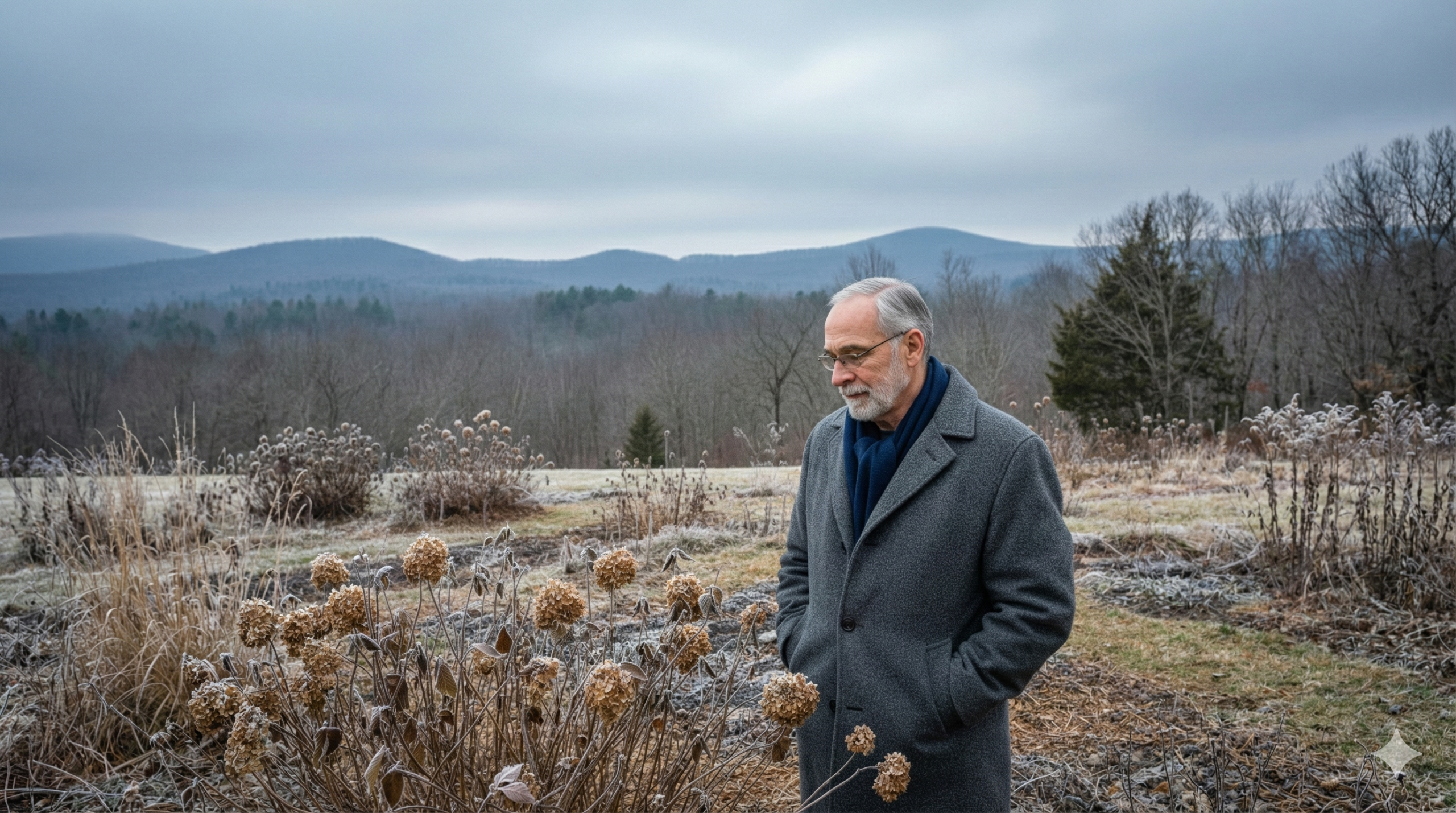
I spent a good chunk of this morning bundled up in my thickest wool coat, walking the perimeter of my sleeping garden. The ground here in the mountains is frozen solid, harder than a circuit board in a deep freeze. The hydrangeas are just sticks in the frozen mud right now, and the maples are stark skeletons against a grey sky. To the untrained eye, it looks dead. But I know better. Deep down in the roots, there is energy storing up, waiting for the right moment to push through.
Back inside, warming my hands around a mug of black coffee, I picked up my acoustic guitar. I’ve been trying to master a complex fingerpicking pattern—it requires your thumb to play a steady bassline while your fingers dance a melody that seems totally independent. It’s hard. If you focus too much on the bass, the melody falters. If you focus on the melody, you lose the rhythm. You have to hear the whole song at once.
That’s exactly what I feel is missing when I look at our country right now. We’ve lost the song.
I spent over thirty-five years debugging systems. When a program crashed, we didn’t yell at the computer; we looked for the root cause. Right now, our societal operating system is throwing critical errors, and the “legacy media” on both sides are just making the glitch worse.
I look at what happened last September with Charlie Kirk. Regardless of what you thought of his politics, a young man was assassinated. Yet, the silence from the “Blue” media ecosystem was deafening. It felt like a calculation, not journalism—a decision that his life didn’t fit the narrative. He was 31 and had a 1 year old child! Now, we flip the channel to the “Red” ecosystem, and I see them tearing apart the character of a woman shot by ICE, treating a tragedy like a talking point to score political points. She was only 37 and had 3 kids, the youngest 6!
It’s binary thinking—1s and 0s—applied to human lives. You’re either a friend or an enemy, a hero or a villain. This divide is widening the canyon in our country, forcing us into separate realities where we can’t even agree on what is tragic.
But here is where the “Liberation Technologist” in me gets excited. I’m looking at the data, and I see a massive refactoring happening. The younger generation—the folks Gen Z and younger—aren’t buying this spaghetti code anymore. They are looking at their bleak economic future, the “structural betrayal” of the job market, and they are opting out of the old system entirely.
They are realizing that the old gatekeepers, the big networks and the algorithm-driven platforms, are the ones profiting from the rage. So, what are they doing? They’re building their own networks. They are moving to decentralized protocols where truth can’t be throttled by a CEO or a government censor. They are becoming independent journalists, using AI tools that cost twenty bucks a month to do the investigative work that used to cost millions.
They aren’t waiting for permission to tell the truth. They are rejecting the “digital double bind” where they have to sell their privacy to participate in the economy. They are building “digital sanctuaries” and mesh networks. They see the “policy murder” Rev. Barber talks about—the poverty and lack of healthcare—and they see the spiritual vacuum, and they are saying, “We can code something better.”
It reminds me of when I was a project lead. Sometimes, the legacy code is so broken, so patched over with quick fixes and workarounds, that you have to stop trying to save it. You have to start fresh and convince the team you’ve been here before and it’s time.
These young people are rewriting the source code of how we consume information. They are stripping away the bloated bias and looking for raw, verified truth. They are the new engineers of democracy, and frankly, they are better at it than my generation ever was.
So, if the news has you feeling like the sky is falling, take a breath. Pour a coffee. Listen to the rhythm. The old system is loud, but it’s dying. The new system is quiet, resilient, and growing just beneath the frozen ground.
We just have to be fellow travelers with them, offering our experience where it helps, but mostly, getting out of their way so they can build.
