
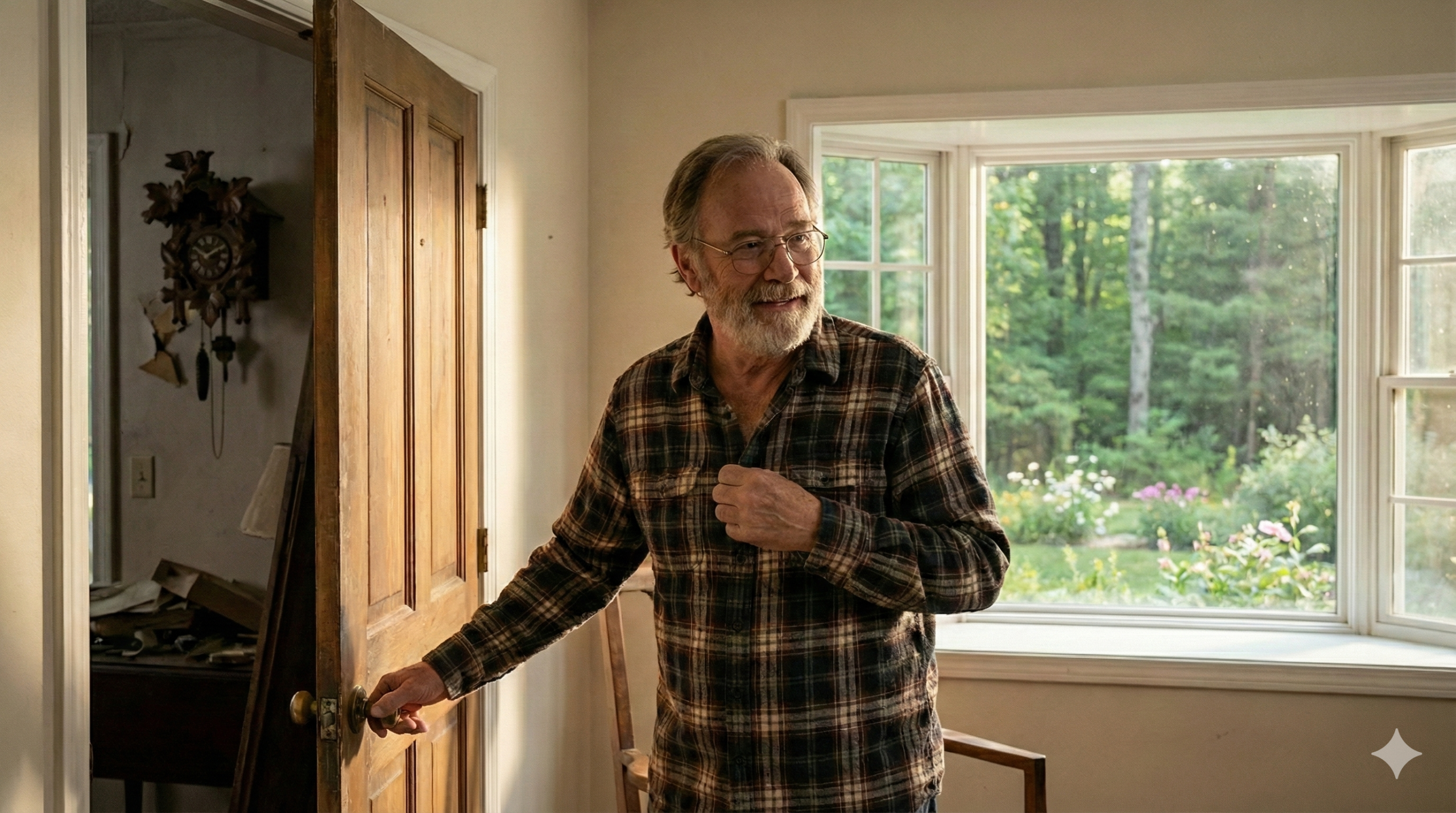
I was in my music studio early this morning, deadheading like Jerry with that classic smile, when I heard the distinct, rhythmic tapping of a woodpecker in the trees near my house. It reminded me of a sound that used to haunt my life: the ticking of an old cuckoo clock.
For a long time, before I found the rooms of Adult Children of Alcoholics and Dysfunctional Families, my romantic life operated with the maddening consistency of that old clock’s minute hand. I was a magnet for bad relationships. It didn’t matter where I went or who I met; somehow, I would find the one person in the room who was emotionally broken, volatile, or controlling. It happened with such precision that you could practically set your watch to it.
As a retired software engineer, my brain is wired to solve problems. When I was working, if a code had a bug, I hunted it down and fixed it. I applied this same logic to my partners. I thought if I just loved them enough, if I was just patient enough, or if I explained things clearly enough, I could “debug” the dysfunction. I treated their abuse like a system error that just needed a patch.
But the “Big Red Book” of ACA handed me a different manual. It says, “We stay in abusive relationships because they resemble how we were raised.” (BRB p. 197).
When I read that, it hit me harder than a bass drum in a rock ballad. I wasn’t just unlucky; I was comfortable. The chaos, the walking on eggshells, the emotional volatility—it all felt like home because it was exactly what I grew up with. I was seeking out the familiar, even though the familiar was painful.
The cycle was always the same. We’d be going along, and things would seem smooth. Then, suddenly—”Bam!”—the rug would get pulled out. Maybe it was a sudden rage, a silent treatment, or a harsh criticism. I would feel betrayed, but worse, I would feel stupid. How did I let this happen again? I’d ask myself. Why did I trust that this time would be different?
The turning point came when I finally realized that I couldn’t fix the clock. In my last bad relationship, the “hands stopped moving.” The dynamic had frozen into a permanent state of disrespect. No amount of my engineering, my pleading, or my “being good” was going to make those gears turn again.
The beauty of the ACA program is that it taught me I am no longer a trapped child. When we were kids, we had to endure the dysfunction because we needed our caregivers to survive. We couldn’t pack a bag and leave. But as adults? We have choices.
I learned that I have the power to remove myself. I learned that there are safe havens. Sometimes that safe haven is a backcountry trail shelter, but often, for me, it was simply the sanctuary of an ACA meeting. Sitting in those folding chairs, surrounded by fellow travelers who nodded in understanding, I realized I didn’t have to wait for the other person to change. I could change my location.
Today, my life is no longer defined by the ticking anxiety of “what happens next?” It’s defined by the peace of a morning walk in the woods, the satisfaction of a home-cooked meal shared with safe friends, and the joy of sleeping soundly through the night.
I know now that I deserve to be treated with dignity. I don’t have to analyze why someone is hurting me; I just have to know that I don’t have to stay for it.
On this day, if you find yourself staring at a broken clock, waiting for it to tell the right time, remember: you are free to walk out of the room. You can choose the best path for your emotional health. You can choose you.
