
It is a crisp, grey mid-January afternoon outside, the kind of day where the bare branches of the trees look like cracks in the sky. Inside, however, things are warm and rhythmic. I am standing at my kitchen island, chopping carrots and celery for a slow-cooked split pea soup. There is something incredibly grounding about the simple act of preparing a home-cooked meal. The repetitive motion of the knife and the anticipation of a healthy dinner helps me settle into my body.
As I tossed the vegetables into the pot, I started thinking about how often my cooking experiments don’t go exactly to plan. Sometimes the heat is too high, or I add too much salt. In the past, a small mistake like that would have ruined my entire evening. I would have spiraled into self-criticism, telling myself I couldn’t do anything right. But today, I just adjust the seasoning, turn down the flame, and keep moving.
That kitchen metaphor feels perfect for where my head is at today regarding my recovery journey. As the daily affirmation reminds us: “All bottoms have meaning, and all bottoms can be a starting point for a new way of life.”
When I first walked into the rooms of Adult Children of Alcoholics & Dysfunctional Families (ACA) ten years ago, I had hit a massive, life-altering bottom. I felt hopeless, exhausted from failed relationships, and lost in a sea of dysfunction. That bottom was the catalyst that saved my life. But what I didn’t realize then—and what I understand clearly now—is that hitting bottom isn’t a one-time event.
Life is a bumpy road. It doesn’t matter how many years of recovery we have or how many “Yellow Workbook” meetings we’ve attended; we never know what is going to happen next. We get thrown curveballs, fastballs and even screwballs. We face grief, job changes, or relationship stress.
I remember when I was working as a software engineer, we had a saying about legacy code: “You don’t know what’s broken until you put a load on the system.” Recovery is similar. I might feel like I have fully conquered my character defect of running away. I feel serene and detached. But then, a family crisis hits, the stress load increases, and suddenly, I find myself right back in the thick of it—trying to fix everyone, being the buffer, and neglecting my own needs.
In the early days, hitting a snag like that would keep me down for days. I would wallow in shame, convinced that I had lost all my progress.
The difference today is the “bounce back.”
I know now that slipping into old behaviors isn’t a sign of failure; it’s just data. It’s a signal that I need to pay attention to something. Because of this program, I bounce back quicker and stronger than I ever did before. When I hit a pothole now, I don’t set up camp there. I check my suspension and get back on the road.
I have tools now that I didn’t have before. When I feel that familiar tightening in my chest—the anxiety of trying to control the uncontrollable—I don’t isolate. I pick up the telephone. I reach out to a fellow traveler and say, “I’m struggling.” I open the Big Red Book (BRB) and read a few pages to remind myself of the solution.
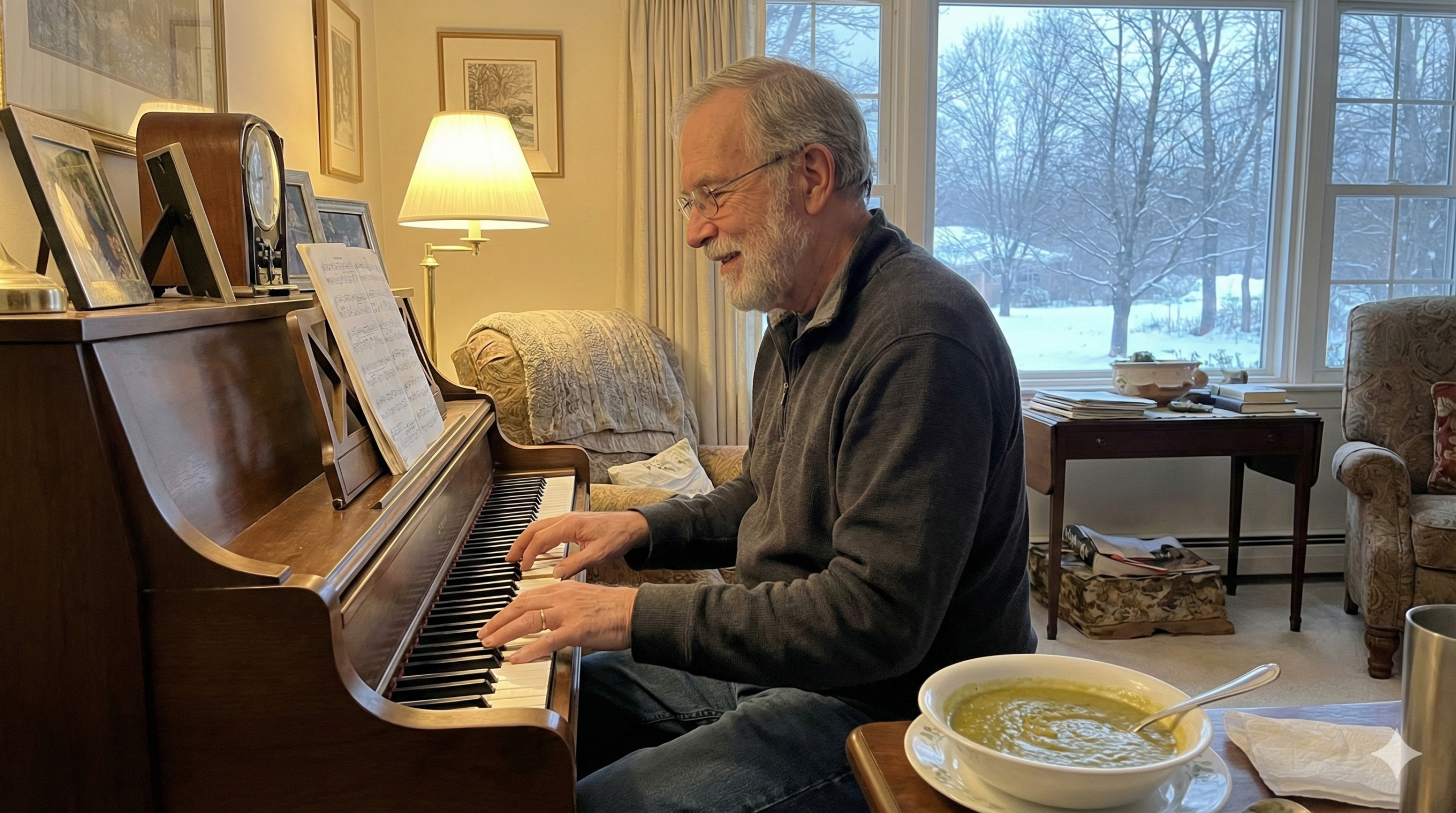
And, perhaps most importantly, I double down on my self-care. When the road gets bumpy, I don’t abandon myself. Instead of staying up late ruminating, I make sure I get adequate sleep. After I get that soup simmering on the stove, I’ll sit down at my piano. I’m not playing for an audience; I’m playing for my own soul. Letting my fingers move over the keys allows me to process emotions that words just can’t reach. It is a form of relaxation that brings me back to my center.
If you feel like you’ve hit a wall recently, or if you’ve slipped back into a behavior you thought you were done with, please be gentle with yourself. You haven’t lost your recovery. You are just experiencing a new bottom, a new depth of understanding.
Today, when I face a challenge, I try to say, “Okay, this hurts, but what is it teaching me?” I know that as long as I stay connected to this fellowship and to my Higher Power, I can weather any storm. The road might be bumpy, but the view is getting better every mile.

Leave a Reply
You must be logged in to post a comment.